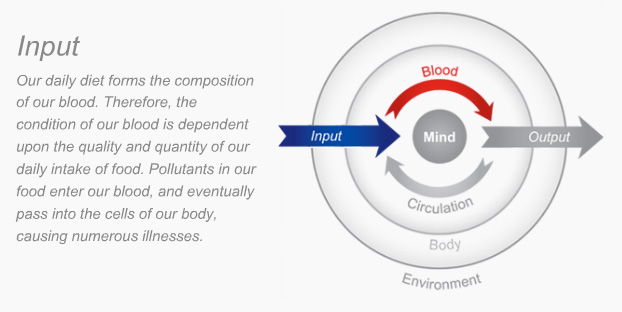
There are three major ports of entry into the blood: the lungs, the digestive tract, and the skin. These function as both the barrier and the doorway to and from the body, to and from the surrounding environment.
So why do we need to breathe, drink, and eat?
We breathe, drink and eat in order to build and nourish the 100 trillion cells in our body, helping to prevent disease, aid growth and maintain energy levels. Every day, our bodies need to regenerate over 200 billion cells, all while maintaining the existing 100 trillion cells. That takes a lot of energy.
The cells in our brain would die without oxygen for more than five minutes. Afterwards, blood would stop flowing, and we would die. The lungs, which have a surface area equivalent to a tennis court, work continuously to sustain life. The lungs supply the blood with oxygen, which then supplies the entire body. The lungs, in turn, filter carbon dioxide from the blood.
Fluid loss of more than one percent of our body weight, the equivalent of five days without water, leads to severe dehydration. Without proper hydration, the chemical reactions that we need to live begin to fail, and blood volume would fall. This would result in low blood pressure, leading to loss of consciousness and death.
Five weeks without food starves the energy sources of the nutrients needed to maintain and regenerate cells, eventually resulting in death.
The oxygen, water, and nutrients must enter our blood in order to reach the cells in our bodies.
For example, carbon monoxide prevents oxygen from binding to our red blood cells. With carbon monoxide poisoning, although one may be breathing, one can still die from hypoxia since oxygen cannot reach the cells.
A balanced diet meets the varied needs of the various cells of the body. Eating foods that represent the colors of the rainbow ensures a balanced diet. In the past, the problem was malnutrition. The current problem is in the overabundance of unhealthy food, leading to obesity, which results in the opposite effect that starving has on blood.
As we breathe, drink and eat to live, we also need to be conscious of the chemicals and pollutants that come along with these activities. These chemicals or pollutants, such as fertilizers, pesticides, herbicides, antibiotics, and growth hormones, are associated with increased incidence of chronic illnesses, like diabetes, heart disease, and cancer.
We should always be aware of the types of things that are entering our blood stream, from the air we breathe to the food we eat.